TIDE FLATS
Shallows vs a generated tide flat. Watch the ripples in the photo compress toward the horizon —
that is the depth cue the shader was missing entirely, and why it read as a flat wall.
SHADER · LIVE
FLUX · STILL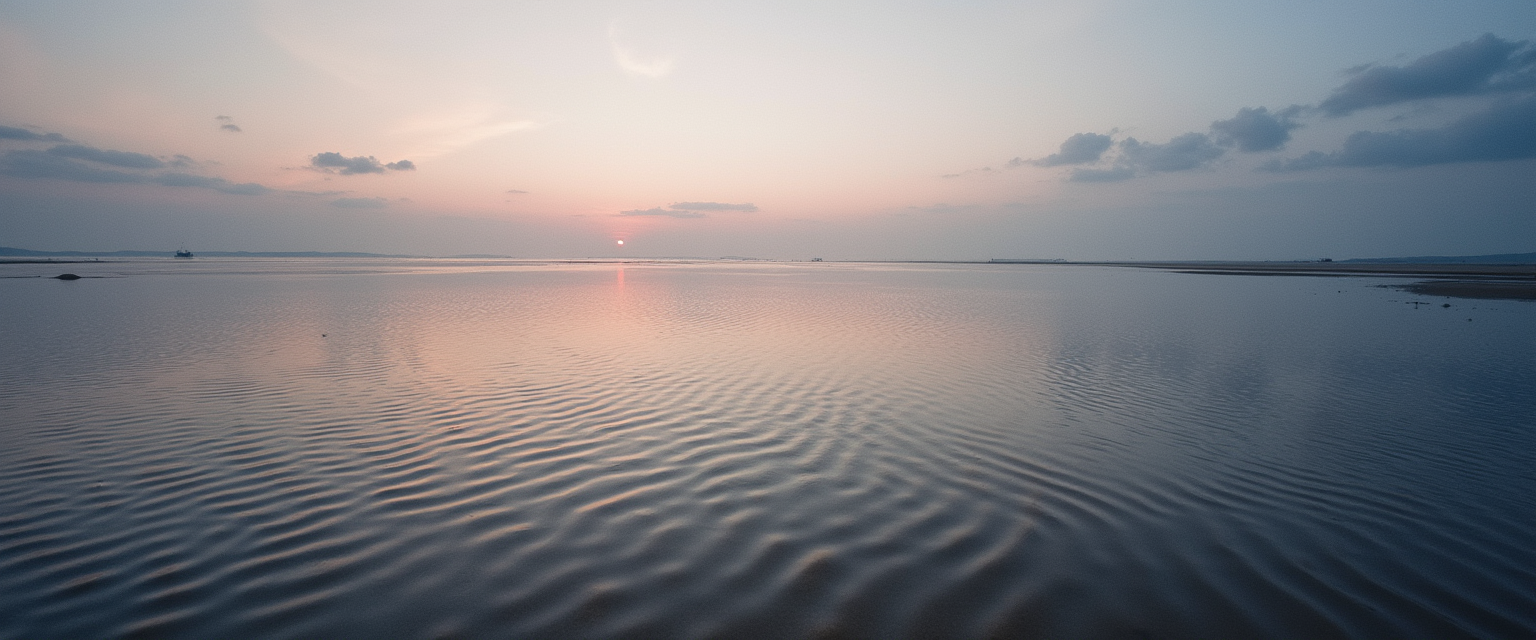
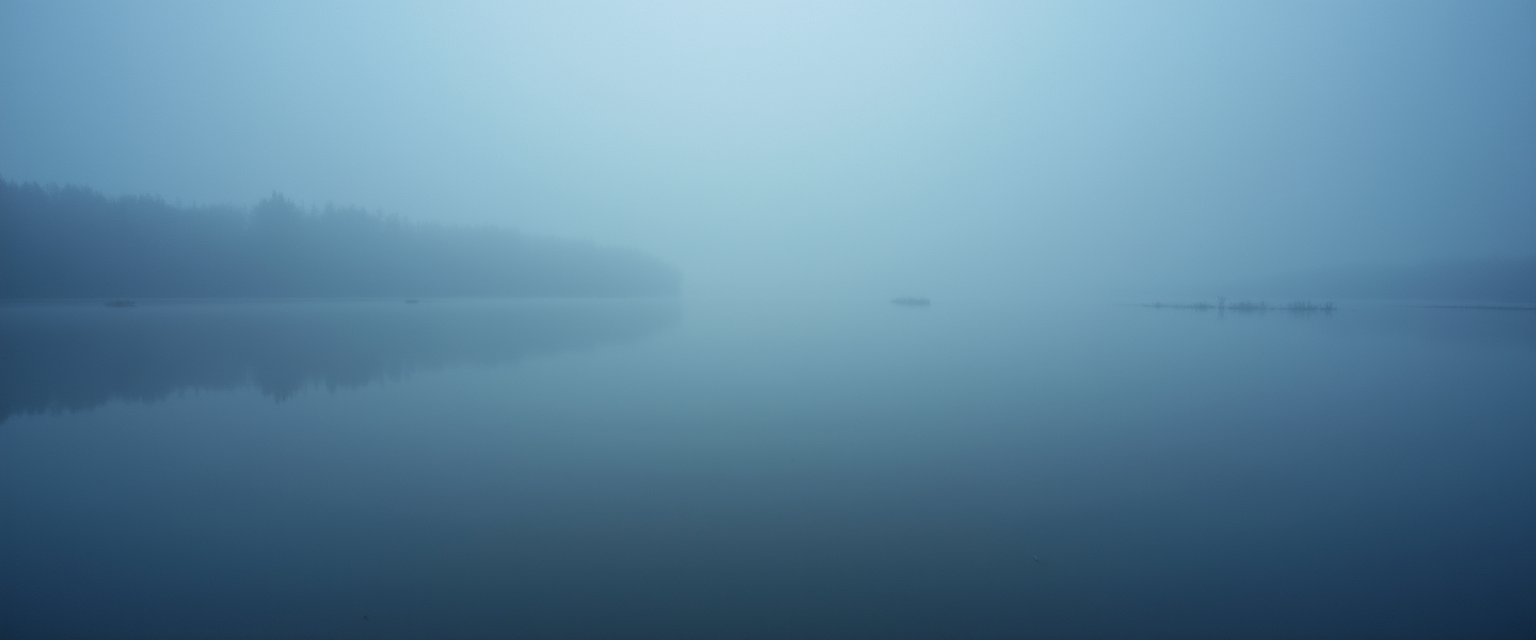
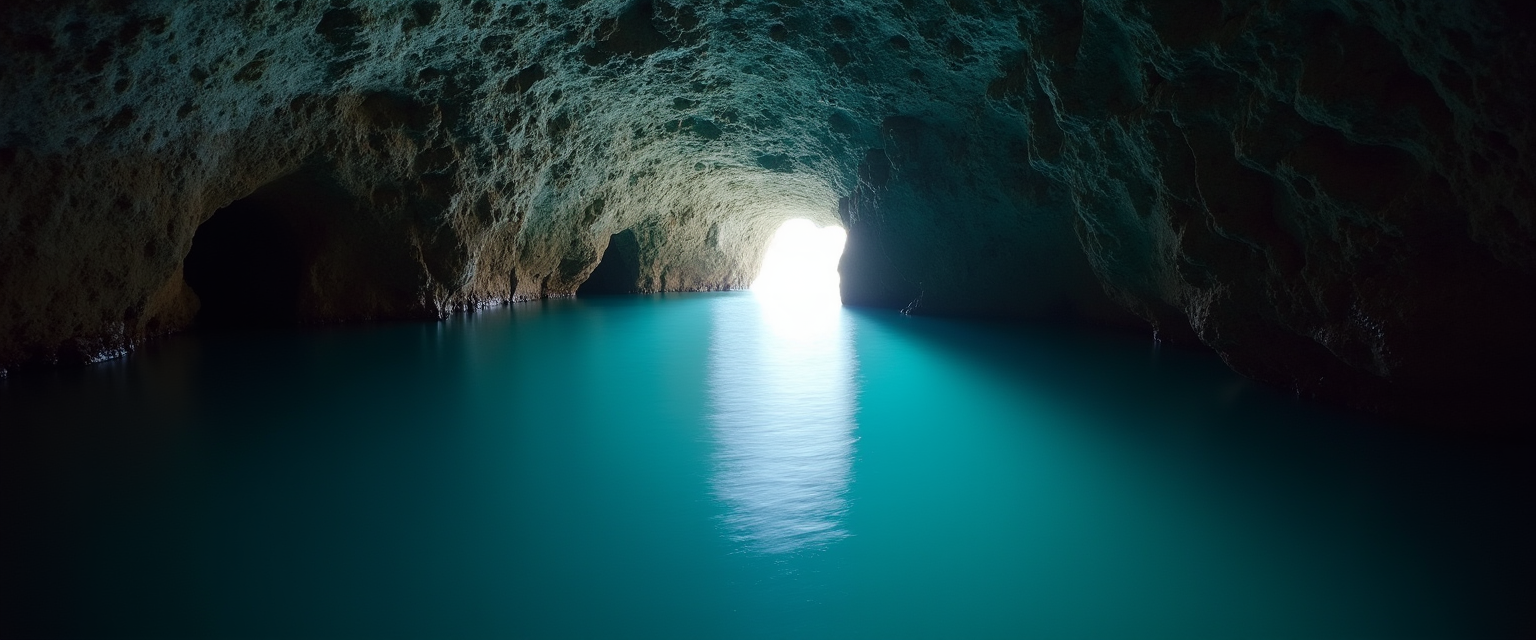
The photo's advantage is depth cues, not detail. FLUX learned from photographs, so it gets aerial perspective, texture compression and correct reflection falloff for free. A shader only has what is explicitly written into it — which is why adding ground-plane perspective to Shallows changed it more than any amount of retiming the waves.
The shader's advantage is time. A plate is one frame. Loop it and a 12-hour spa day will make the loop legible — someone in the water for 40 minutes will notice. Shaders never repeat, which is the whole reason they suit this room.
So the hybrid is not "pick one". It is: use a plate where the subject is nearly still — fog, a water surface, wet rock, embers — and let the shader supply every bit of the motion and change on top. The plate gives photographic surface; the shader guarantees you never see the same minute twice.